The Great Wildebeest Migration Safari In Kenya & Tanzania
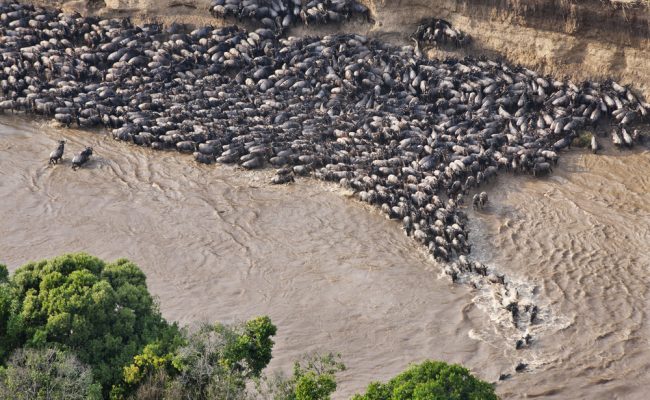
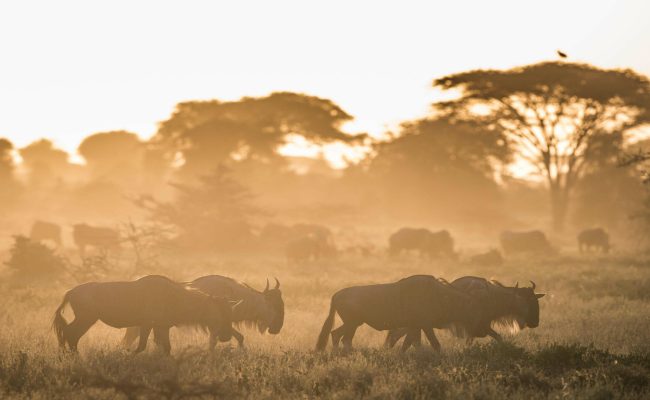
The Great Wildebeest Migration as it is known is the movement of a million plus wildebeest from Serengeti in Tanzania northwards into the adjoining Masai Mara Reserve in Kenya. It is one of the world’s most spectacular and thrilling display of wildlife behaviour. The wildebeests river crossings takes place every year with the animal’s primal instincts guiding them towards greener pastures following the climatic rainfall patterns over the Serengeti-Maasai Mara eco system. The Wildebeest Migration safari is one of the most spectacular natural events on Earth, often referred to as the “Greatest Wildlife Show on Earth.” Every year, over 1.5 million wildebeest, accompanied by hundreds of thousands of zebras, gazelles, and other herbivores, embark on a circular journey across Serengeti and Masai Mara in Kenya.
The constant movement of crowds of wildebeest, joined by a host of companions, follow an age-old route in search of grazing and water. After calving in the southern part of Tanzania’s Serengeti near the Ngorongoro Conservation Area, the animals march forward through the Serengeti up and around in a clockwise direction towards the Masai Mara National Park in Kenya, before returning once again near the end of the year. Along the way, high drama is always present, as thousands of animals are taken by big five cats and thousands more are born along the way, replenishing the numbers and sustaining the circle of life.
While it remains unclear how the wildebeest know which way to go, it is generally believed that their journey is dictated primarily by their response to the weather; they follow the rains and the growth of new grass. Some African safari experts believe that the animals react to lightning and thunderstorms in the distance, and it has even been suggested that wildebeest can locate rain more than 50km away.
Search Through 20+ Big Five Tours & Itinerary Ideas
Then customize yours with an expert. Our listed big 5 safari tours are chosen to not only inspire but also enlighten you – showing you how top African safari destinations can work together in an itinerary. When it comes to planning Big 5 journeys to Africa, we’re tailor-made travel specialists. An African Safari Expert will customize your vacation, shaping it around your individual wants and preferences. No time to browse? Get in touch with a African Safaris Expert to plan a tailor-made tour around your interests, wishes and budget
8-Days Kenya Safari and Beach Holiday
per person
$1.00-
Experience Optional Activities Hot Air Balloon Rides, Sundowners, Night-Time Game Drives with this premium package.
-
Inclusion This package covers Accommodation, Daily Meals, Park Entry Fees & Local Transfers to ensure a worry-free trip.
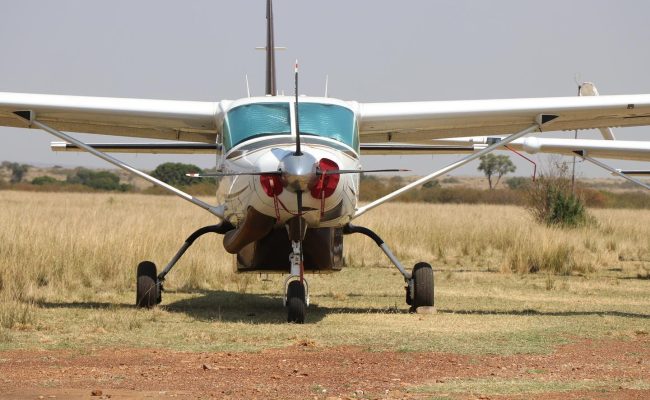
6-Day Fly-In Safari Kenya
per person
$1.00-
Experience Optional Activities Hot Air Balloon Rides, Sundowners, Night-Time Game Drives with this premium package.
-
Inclusion This package covers Accommodation, Daily Meals, Park Entry Fees & Local Transfers to ensure a worry-free trip.
10-Day Best of Kenya and Tanzania Safari
per person
$1.00-
Experience Optional Activities Hot Air Balloon Rides, Sundowners, Night-Time Game Drives with this premium package.
-
Inclusion This package covers Accommodation, Daily Meals, Park Entry Fees & Local Transfers to ensure a worry-free trip.
12-Day Kenya and Tanzania Africa Safari
per person
$1.00-
Experience Optional Activities Hot Air Balloon Rides, Sundowners, Night-Time Game Drives with this premium package.
-
Inclusion This package covers Accommodation, Daily Meals, Park Entry Fees & Local Transfers to ensure a worry-free trip.
10-Day Tanzania Safari
per person
$1.00-
Experience Optional Activities Hot Air Balloon Rides, Sundowners, Night-Time Game Drives with this premium package.
-
Inclusion This package covers Accommodation, Daily Meals, Park Entry Fees & Local Transfers to ensure a worry-free trip.
7-Day Kenya Safari Adventure
per person
$1.00-
Experience Optional Activities Hot Air Balloon Rides, Sundowners, Night-Time Game Drives with this premium package.
-
Inclusion This package covers Accommodation, Daily Meals, Park Entry Fees & Local Transfers to ensure a worry-free trip.
Where Does the Great Migration Safari Start?
Because the Great Migration is a fluid, year-round movement of about two million animals across the Serengeti-Mara ecosystem, there are no defined start or end points to all this movement. The Gnu Migration is triggered by East Africa’s rains, and the animals follow an age-old route in search of fresh grazing and water. This epic journey takes the wildebeest across the Masai Mara plains in Kenya, all the way south into Tanzania’s Serengeti Park and the edge of the Ngorongoro Crater, before circling up and around in a clockwise direction.
Can the Migration River Crossings be Predicted?
No, the wildebeest migration can never be predicted because not even the wildebeest know when they’re going to cross! Some arrive at the water and swim over immediately; some arrive and spend days hanging around grazing; some arrive and turn back to where they came from. As safari experts in the field, we wish we could predict the crossings, but no-one can. This is why it is best to have as much time on safari as possible if you hope to see a river crossing.
A Guide to the Wildebeest Migration Tour
Travelers planning a safari to Kenya often have many questions related to the migration and we are listing the most common below for the sake of brevity. What time of the Year is the Wildebeest Migration? Though the migration into Masai Mara the exact dates around this period are not predictable until the first large wildebeest herds gather at the northern edge of Serengeti as they near the Mara. These initial herds are sometimes known to gather at a spot for days on end without crossing over to the Mara, so when exactly the final leg of the movement starts is difficult to predict.
Complete Month by Month Wildebeest Migration Calendar Events
Many of you think that the Great Migration crossing only happens once in a year, but the migration is in fact all year-round phenomenon event – offering different unique and exciting wildlife experience at various months of the year. The river crossing is one of the most toured events during an African safari trip, usually coinciding with the peak safari season in Kenya, therefore the assumption that this is the only time of the year that the wildebeest are on the move or can be seen. This crossing usually occurs at Mara River around late July to August with parts of September and again on their return south, around the last two weeks of October through early November. Hence, the best times to track and see the annual wildebeest migration in Masai Mara. Below is a month by month detailed breakdown of where the herds are during the year, bearing in mind it’s difficult to predict the herds movement as it’s prompted by rain, which can be early, late or ‘on time’. Below is where to see the wildebeest migration every month.
January Wildebeest Migration Sightings
In January, the herds are in Tanzania’s Serengeti National Park, moving south from the north-east region and into the area near Lake Ndutu. The Serengeti is not fenced, so the herds are free to move where they can find grazing. Remember that although up to two million wildebeest, zebra and antelope form the Serengeti Migration, they are not all in a single herd. The animals break up into mega-herds of thousands or hundreds of individuals at time.
February to March Wildebeest River Crossings
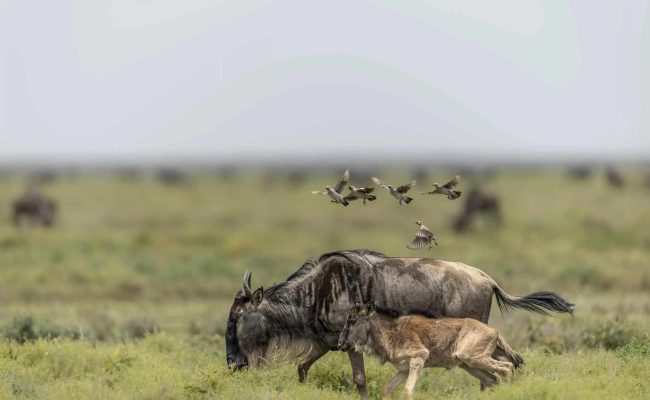
From February to March, it is calving season (over 8 000 wildebeest babies are born each day!) so prepare yourself for lots of wobbly calves… and lots of heartbreak as fearsome predators swoop in. The Serengeti’s big cats take the lion’s share, but hit-and-run jackals, packs of wild dog, and hyena clans add to the spectacle. It’s a bittersweet ballad; the circle of life played out as a live action drama. If the short rainy season produced good grazing, the herds feed frenziedly and remain in the Serengeti’s southern plains until they slowly start moving west in March.
Wildebeest Safaris In April
In April, it’s the start of the long rains and the herds generally move in a north-westerly direction towards the Moru and Simba Kopjes. The action-packed rutting (breeding) season is in full swing, featuring testosterone-fuelled jousts between males competing for the right to mate with receptive females.
May Wildebeest Migration Safaris
In May, wagons roll! The massed herds are on the go, huge columns of up to 40 kilometres (25 miles) in length can sometimes be seen as the wildebeest funnel up into the central Serengeti. Everyone’s moving a little quicker now that the calves are stronger
Watching Wildebeest Migration In June
From June, the wildebeest are usually in the central Serengeti and getting ready for the toughest part of their odyssey. The herds may have split up, with some already crossing the Grumeti River.
July Wildebeest Safaris
In July, the Great Migration have reached the Grumeti region and northern parts of the Serengeti and are peering closely at the treacherous waters of the Mara River they must cross into Kenya. Why? Huge Nile crocodiles, that’s why!
Seeing The Wildebeest Migration In August
August is generally considered the best time to witness the dramatic river crossings from the northern Serengeti into the Masai Mara. You’ll need a passport to cross into Kenya; the wildebeest are exempt. The Masai Mara National Reserve is open to members of the public so for a more exclusive safari experience, head for the private conservancies that are contiguous with the reserve.
Wildebeest Crossing The River In September
In September, the herds break up into smaller groups, as not all the wildebeest migrate into Kenya. Less than half of the animals remain in the northern Serengeti, the rest are swapping war stories in the Masai Mara. So you could still see wildebeest in the Serengeti (just not the mega-herds) but as a general rule of thumb, the Masai Mara is the best place to witness the Migration in September.
October Wildebeest Migration Tours
From October, your best bet is still the Masai Mara, but bear in mind it is a far smaller reserve than the Serengeti and there may be a lot of other visitors. The neighbouring private conservancies are much less crowded and, not only will you still be able to witness the Migration, but you will also directly contribute to the Maasai communities who have lived there for thousands of years. Plus, you can enjoy off-road game viewing, night drives and walking safaris – activities not permitted in the national reserve.
November Wildebeest River Crossing
In a ‘normal year’ in November the short rains have begun, propelling the wildebeest to leave the now denuded grasslands of the Masai Mara and head back into the rejuvenated Serengeti. Bear in mind that the rain can be late or early, which is also unpredictable. The herds are generally on the move but can be seen around the north-eastern parts of the Serengeti where they may split into smaller groups for their journey southward.
Tip: although many people think of Africa as a hot place, the rain can cool things down dramatically. You’ll be out on early morning and late afternoon game drives – the sun is at its weakest during these times. Take at least one pair of trousers, closed shoes that can cope with mud, and a fleece or waterproof jacket.
Wildebeest Migration In December
In December, fresh grazing sees the wildebeest move south, covering the northern and eastern Serengeti to feast and prepare for yet another death-defying, 3 000-km (1 900-mi) odyssey.
Related
Kenya constantly ranks as one of best places to go on safari in Africa. Our knowledgeable Africa travel team is here to create your safari itineraries, tailored to your dream holiday and destinations. If you’re planning a first-time safari in Kenya, we are ready to assist you during every step of your journey, from the exciting process of itinerary planning to support throughout your trip and keep in touch once you have returned home.
Best Time to Visit Masai Mara
Masai Mara Conservancies
What to Pack for Masai Mara
Best Places to Visit In Kenya
Kenya
Explore More Safari Destinations
Kenya constantly ranks as one of best places to go on safari in Africa. Our knowledgeable Africa travel team is here to create your safari itineraries, tailored to your dream holiday and destinations. If you’re planning a first-time safari in Kenya, we are ready to assist you during every step of your journey, from the exciting process of itinerary planning to support throughout your trip and keep in touch once you have returned home.